Dataset · Spatial · October 2026
Spatial Foundry
A multimodal dataset for spatial intelligence
Spatial Foundry contains 5,280 furnished residential 3D scenes with point clouds, editable meshes, aligned perspective and panoramic RGB, metric depth, 3D bounding boxes, and camera trajectories paired with video.
5,280 scene configurations · Perspective & panoramic RGB · Metric depth · 3D instance annotations
Shared scene coordinates establish correspondence across views, geometry and object instances. Per-frame camera poses register video observations to the 3D scene, while editable source assets support controlled variation in camera motion and scene state.
5,280 3D scenes
Diverse residential layouts and furnishing configurations
Perspective & panoramic RGB
Calibrated perspective and 360° observations of the same scenes
Camera trajectories & video
Video sequences paired with frame-level camera poses
Depth & 3D bounding boxes
Metric depth, object dimensions and persistent instance IDs
Point clouds & 3D meshes
Metric point samples and editable scene geometry
Scene counts include alternative furnishing configurations of the same layout.
Demos
The demonstrations below illustrate the use of paired observations and 3D annotations for geometric learning, scene understanding, controllable generation and interactive world modeling.
Contents
V00
Dataset overview
Furnished US-style residential environments are represented by floor plans, colored point clouds and editable 3D meshes. Perspective and panoramic observations are paired with metric depth, instance-level 3D annotations, and camera trajectories with corresponding video.
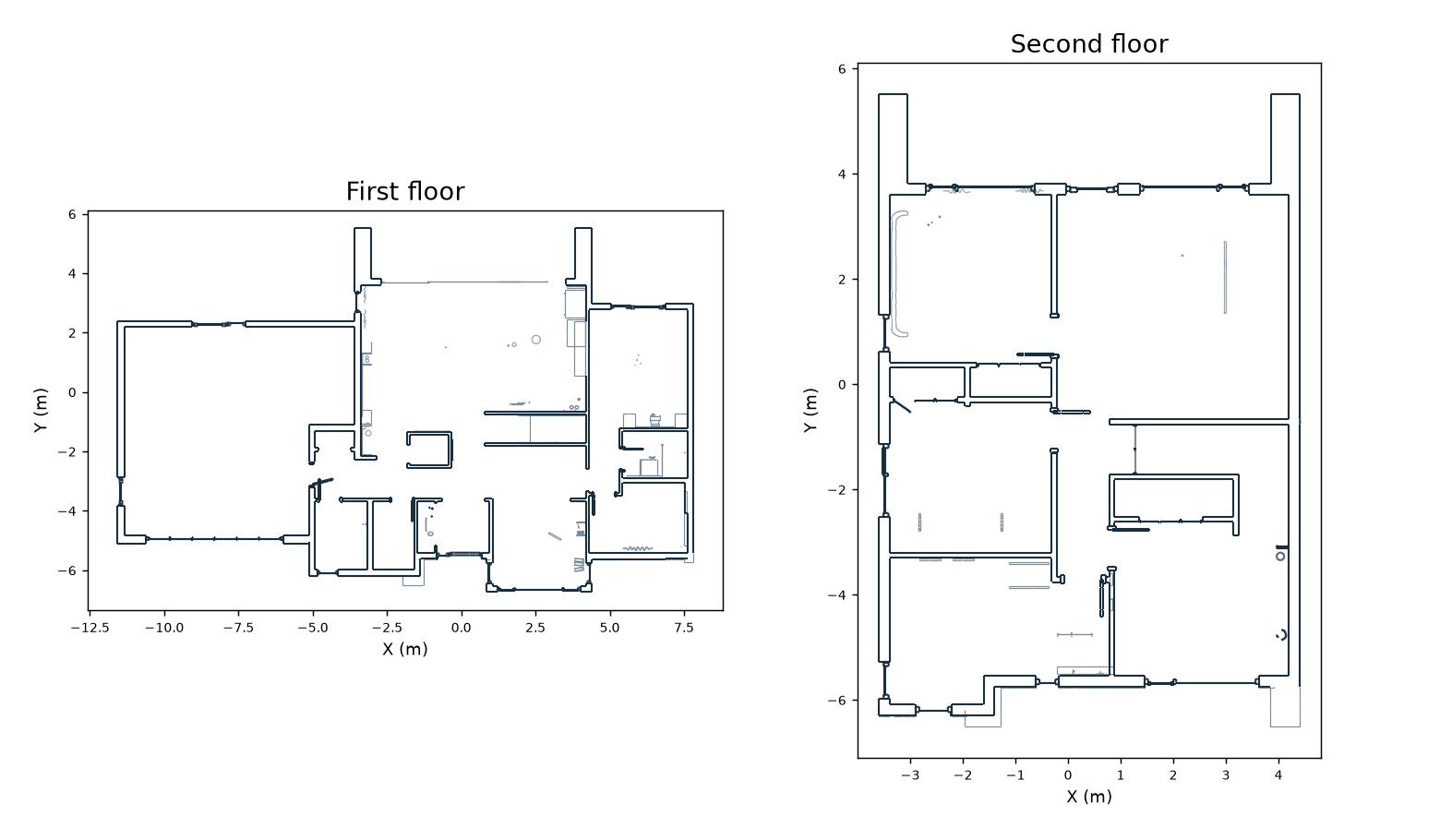
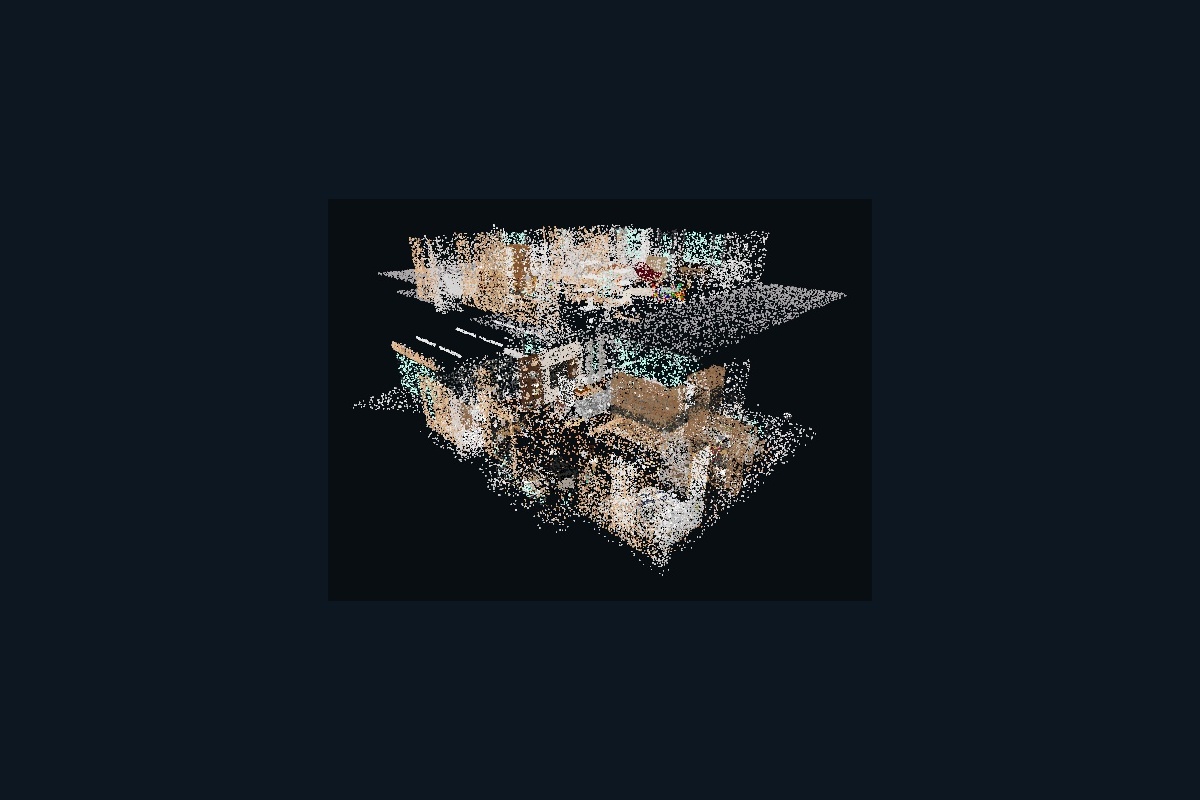
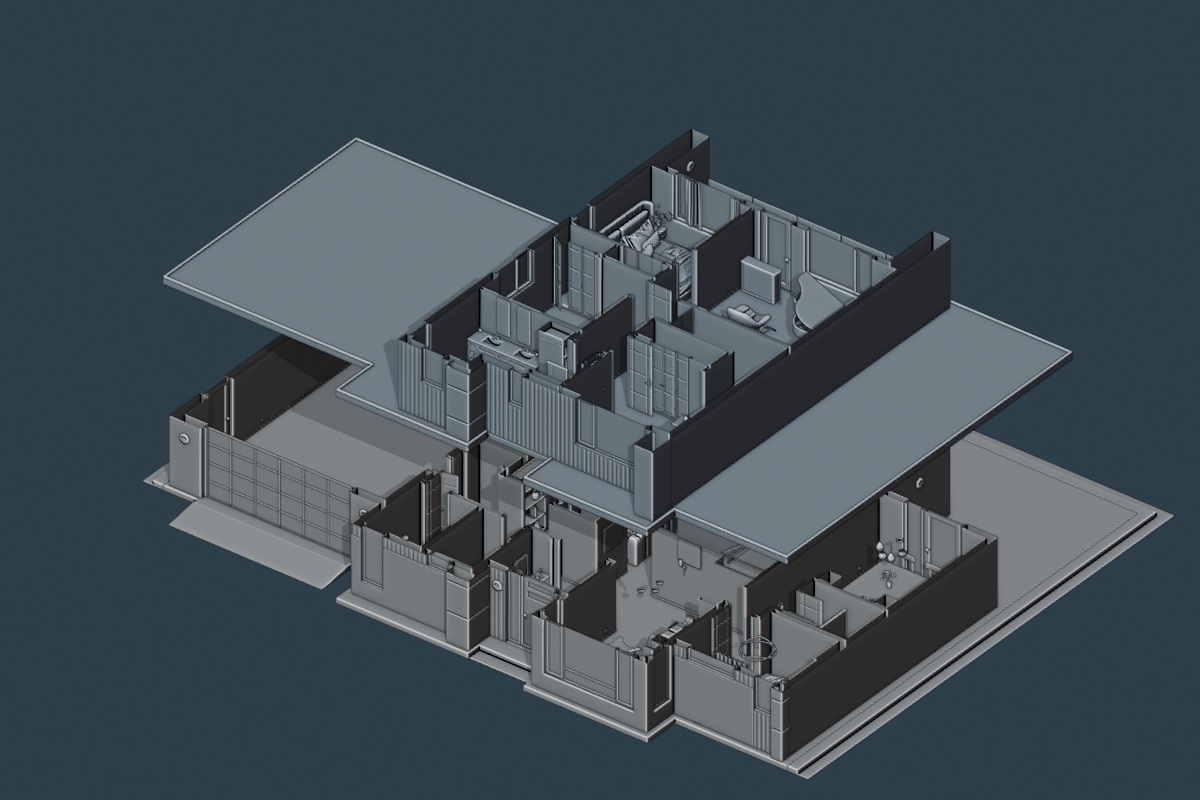
Three representations of the same two-floor home. Floors are separated for visibility in the 3D previews; source coordinates and dimensions remain metric.
Paired observations & annotations
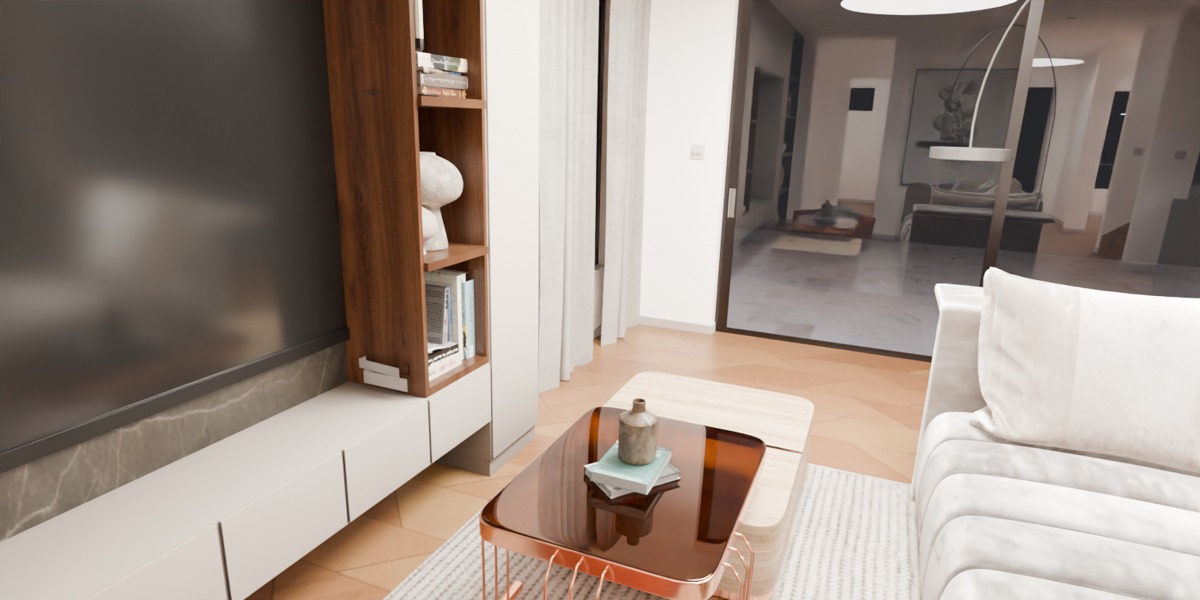
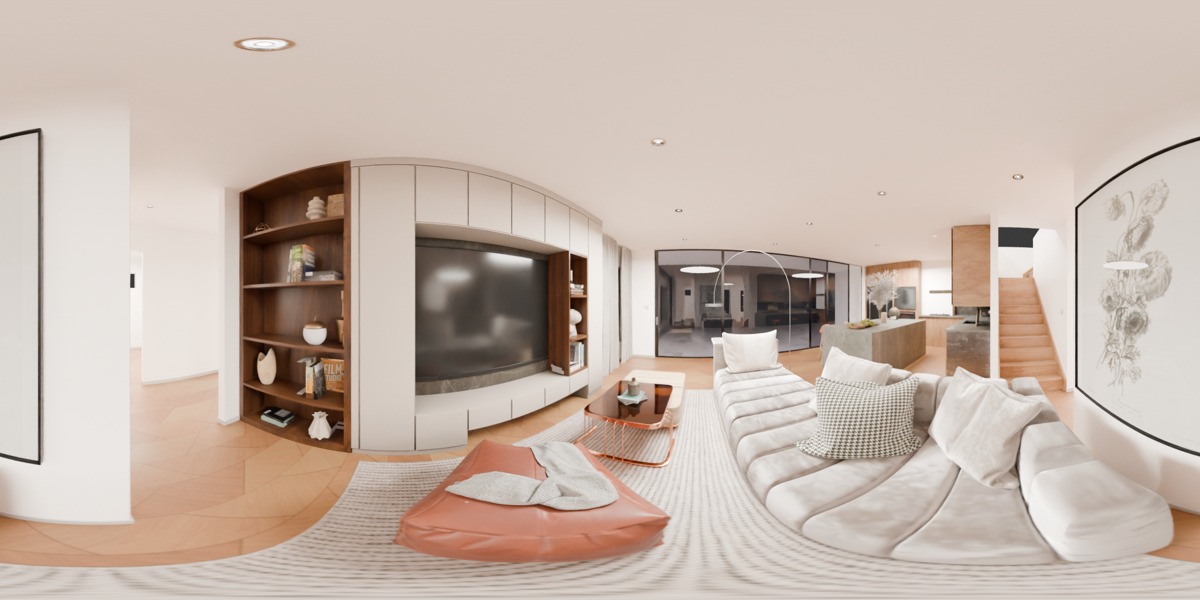

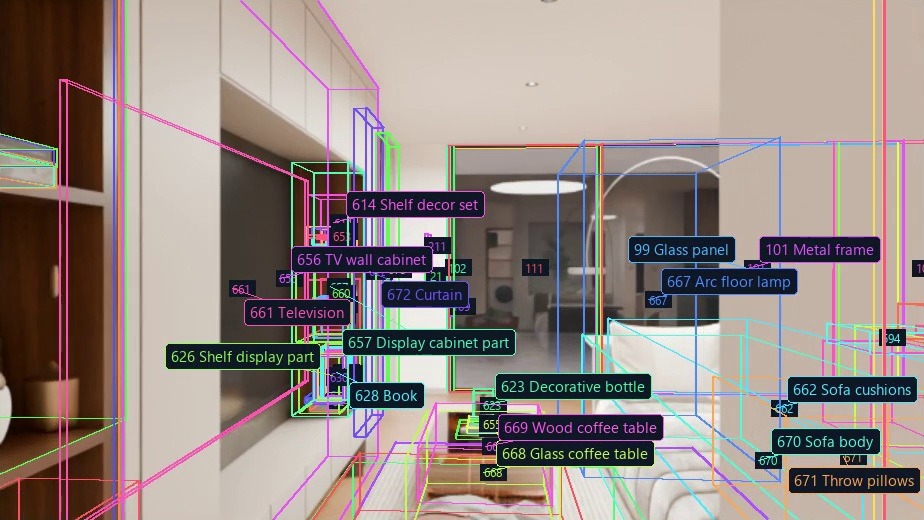
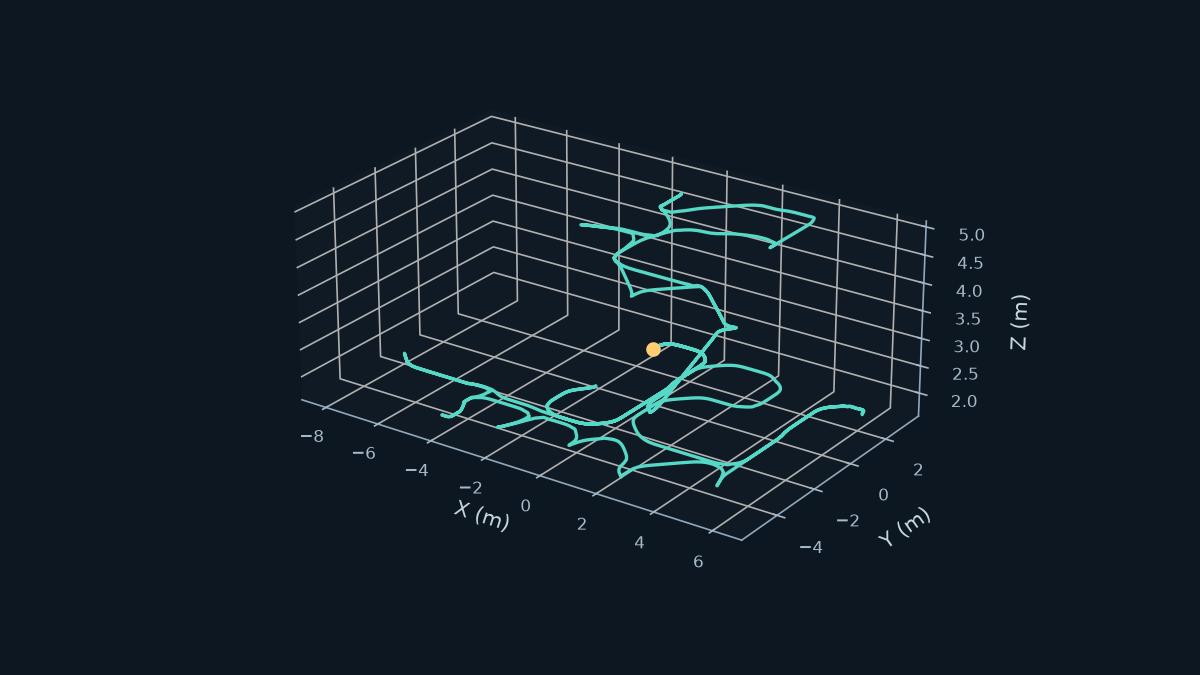
Spatial learning requires correspondence between visual observations and the underlying scene structure. Explicit geometry, object identities and camera calibration provide supervision beyond image appearance alone.
A common 3D reference links supervision across views, modalities and temporal sequences.
V01
Scale & diversity
The collection comprises 5,280 residential scene configurations spanning different layouts, room compositions and furnishing arrangements.
32 s · scene gallery across layouts
Limited environmental diversity can bias models toward familiar layouts and object configurations. Variation in scene structure and furnishings supports evaluation of generalization across residential environments.
Layout and furnishing variation provide distinct axes for studying environmental generalization.
V02
RGB-D & camera geometry
Perspective and panoramic RGB observations are associated with metric depth and camera calibration, providing aligned visual and geometric supervision for depth estimation, novel view synthesis and multiview reconstruction.
18 s · aligned RGB, depth and panoramas
Geometric learning depends on consistent camera models and metric scale. Misalignment between appearance, depth and camera calibration introduces ambiguity into both supervision and evaluation.
Consistent scene coordinates support comparisons between image-space predictions and explicit 3D structure.
V03
3D instance annotations
Persistent object IDs, metric dimensions and 3D bounding boxes associate image observations with scene instances. Corresponding RGB and point-cloud annotations support object localization and cross-view instance reasoning.
18 s · instance annotations across views
Instance-level scene understanding requires object identity to remain consistent across viewpoints. Explicit 3D bounds and dimensions provide geometric references for localization and spatial relationships.
Shared instance identities enable consistent supervision across multiple observations of the same environment.
V04
Trajectory-conditioned video
RGB video is paired with camera trajectories, intrinsics and timestamps. Continuous routes include room transitions, stair traversal, camera-height variation and return visits, providing reference sequences for trajectory-conditioned generation.
2 min 02 s · continuous two-floor camera route
Textual motion instructions do not fully specify a camera trajectory. Explicit pose sequences define position, orientation and timing, enabling reproducible evaluation of camera control and spatial consistency.
Rendered reference sequences permit comparison under explicitly specified camera conditions.
V05
Multi-agent collaboration
Synchronized observations from multiple participants are associated with a shared scene state. Object-state updates persist across independent viewpoints, supporting the study of consistency in online, multi-agent world models.
18 s · two synchronized participants
Multi-agent world modeling requires consistent state across observers. A scene update initiated by one participant should be reflected in other viewpoints and retained in subsequent observations.
A shared 3D state provides a reproducible reference for multi-observer interaction.
V06
Real-time scene editing
Object-level transformations and edit events are paired with observations along a camera path. Translation, insertion, removal and rotation produce persistent changes in scene geometry, visibility and rendered appearance.
24 s · edits along a continuous camera path
Spatially consistent editing requires changes to persist beyond a single image. Updated object geometry must remain coherent with occlusion, illumination and subsequent camera viewpoints.
Recorded scene-state changes provide reproducible supervision for editing and action-effect prediction.
Modalities
Data modalities
The dataset provides scene assets, calibrated observations and structured annotations. Camera trajectories, video frames and object identities establish correspondence across spatial and temporal observations.
Scene assets
Furnished 3D meshes, floor plans and structural geometry
Layout understanding, scene generation and controlled scene variation
Visual observations
Perspective and panoramic RGB, camera intrinsics and extrinsics
Multiview learning, novel view synthesis and geometric reprojection
Metric geometry
Depth maps, point clouds, mesh geometry and object dimensions
Depth estimation, metric reconstruction and 3D localization
Instance annotations
Object IDs, semantic labels, 3D bounding boxes and cross-view instance correspondence
3D detection, visual grounding and instance-level scene understanding
Trajectory–video pairs
Camera trajectories, RGB video, frame-level poses and timestamps
Trajectory-conditioned generation, navigation and temporal consistency evaluation
Scene-state changes
Object transforms, edit events and observations of updated scenes
Action-conditioned modeling, multi-agent interaction and edit consistency
Access
Dataset access
Evaluation samples are available to assess data formats, camera conventions and annotation structure. Contact the data team to discuss research requirements and licensing.
Access